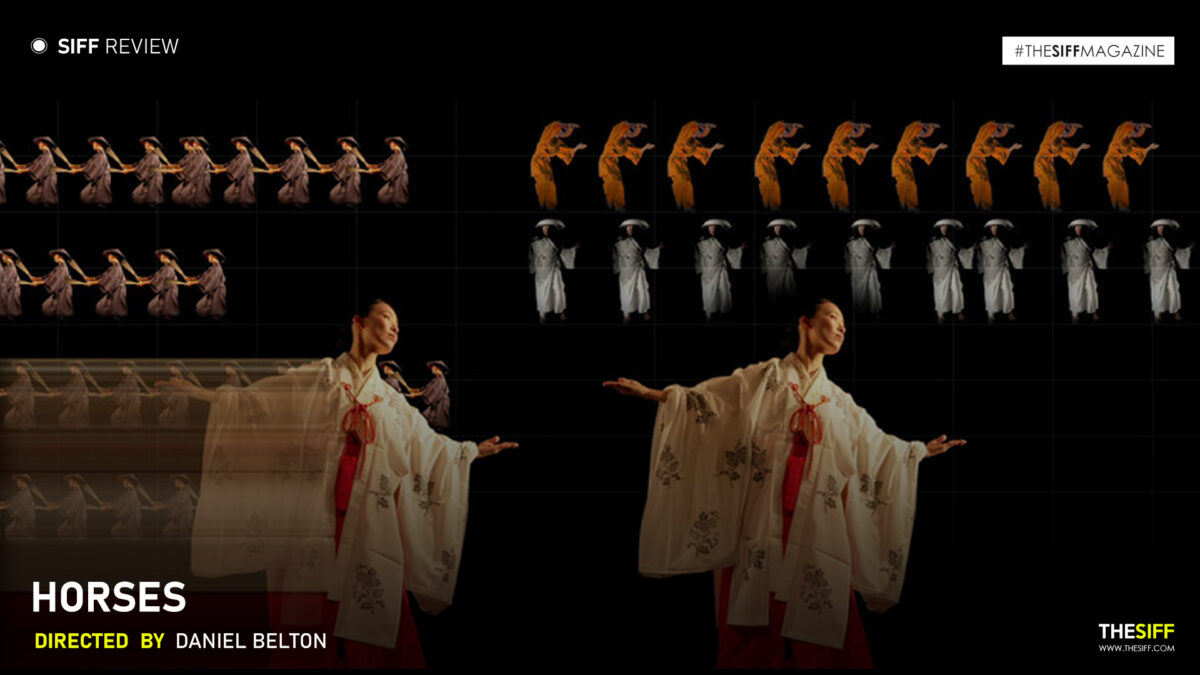
Movie: Horses
Director: Daniel Belton
Horses, directed by Daniel Belton, unfolds less like a traditional film and more like a living, breathing structure of sensation. It resists narrative comfort and instead draws the viewer into an experience shaped by motion, stillness, and visual rhythm. What makes it remarkable is its impeccable amalgamation of visual and performative storytelling, where dance does not simply exist within cinema but becomes the very language through which cinema speaks.
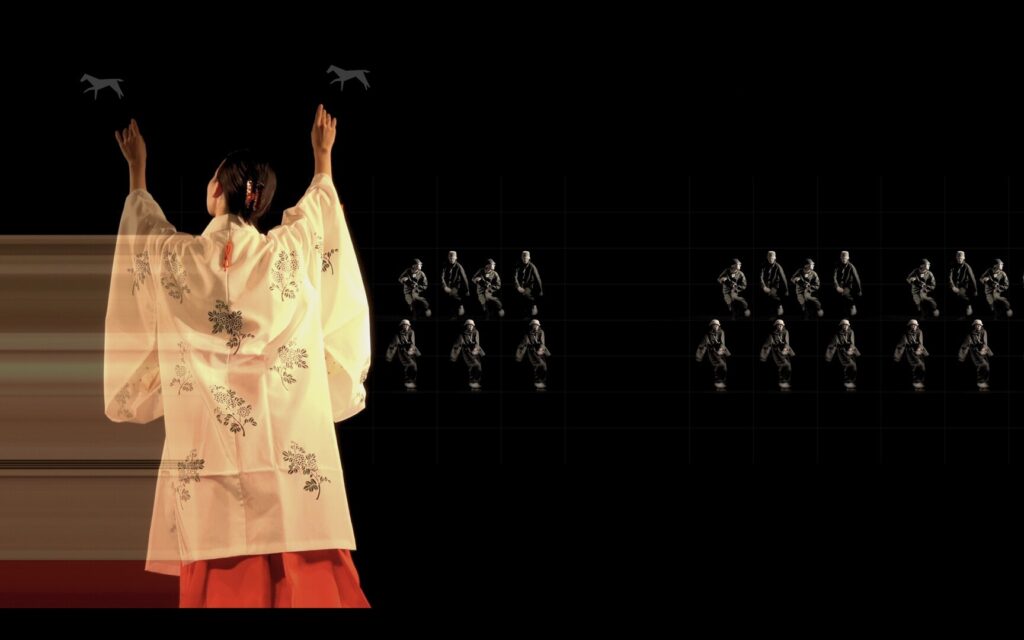
From the very beginning, the film establishes a striking restraint in its visual design. The palette leans into muted tones, with greys, softened blacks, and understated earthy shades dominating the screen. This smart use of dull colours is not an aesthetic limitation but a deliberate artistic choice. By holding back on vibrancy, the film allows movement to emerge with greater clarity and force. Every gesture appears more pronounced, every shift in energy more visible, as though colour itself has stepped aside to let the body take precedence.
There is an astonishing level of control in the way the performers inhabit space. The coordination is so precise that it begins to feel almost unreal. Each dancer moves in exact alignment with the others, yet never loses individuality. The synchronisation is not mechanical but deeply organic, as if all bodies are responding to a shared internal pulse. The framing device of segmented panels enhances this effect, turning the screen into a carefully arranged field where multiple movements coexist in perfect balance. Nothing feels accidental. Every frame is composed with intention, and every transition carries a quiet authority.
The film’s relationship with sound is equally compelling. The score by Mark de Clive-Lowe does not overwhelm the visuals but gently guides them. At times, it recedes almost entirely, leaving behind a charged silence. The story is told through rhythmic music that seems to circle around this silence, never fully occupying it. In these moments, the absence of sound becomes as meaningful as its presence. The viewer becomes aware of breath, of stillness, of the invisible spaces between actions. It is within these gaps that the film finds much of its emotional depth.
The use of visual metaphors throughout the film is both subtle and profound. The recurring image of the horse, rendered through delicate animation, carries a quiet intensity. It is not just an animal but a representation of motion, endurance, and transformation. The influence of Étienne-Jules Marey can be felt in the way movement is broken down and reassembled, as though time itself is being examined frame by frame. The horse becomes a trace of energy moving through space, linking past explorations of motion with contemporary digital expression.
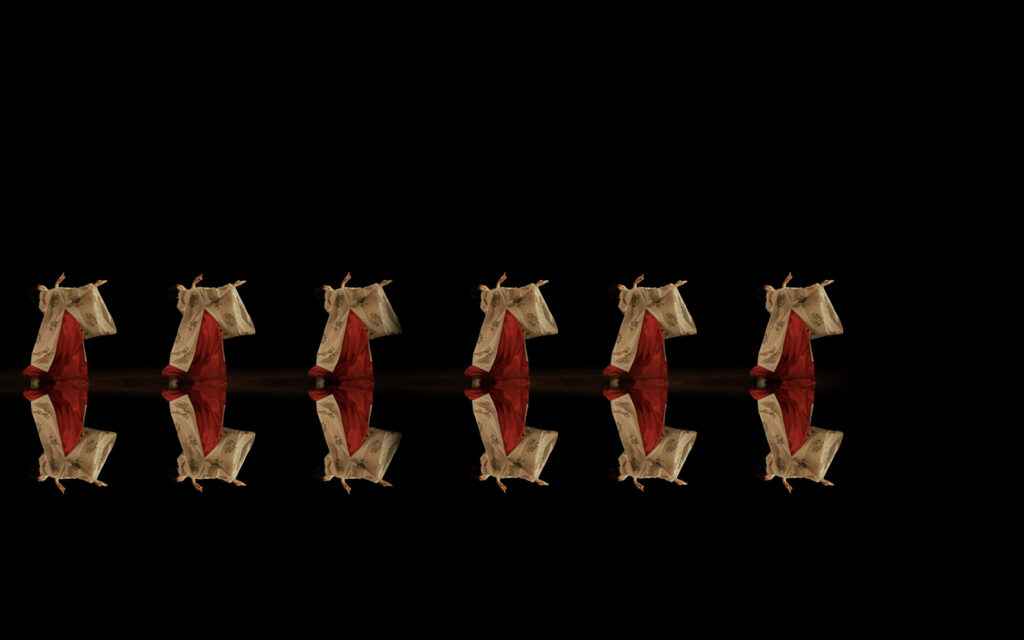
Symbolism runs deep within the film’s structure. The segmented visual grids evoke both traditional design and early cinematic forms, suggesting a connection between different ways of seeing across time. The central performer often appears almost otherworldly, not simply dancing but shaping the environment itself. Her presence suggests a bridge between the physical and something more intangible, as though she is both within the frame and beyond it.
There are clear echoes of Akira Kurosawa, particularly his work in Dreams, where composition and movement create a kind of visual poetry. Yet Horses does not imitate. It builds upon that legacy, extending it into a space where digital techniques allow movement to transcend physical limits.
In the end, Horses is not concerned with telling a story in the conventional sense. It is concerned with evoking a feeling, a state of awareness. Through its careful balance of motion and stillness, sound and silence, it creates an experience that lingers long after it ends. It is a film that asks to be felt as much as it is watched, offering a quiet yet powerful meditation on movement, connection, and transformation.