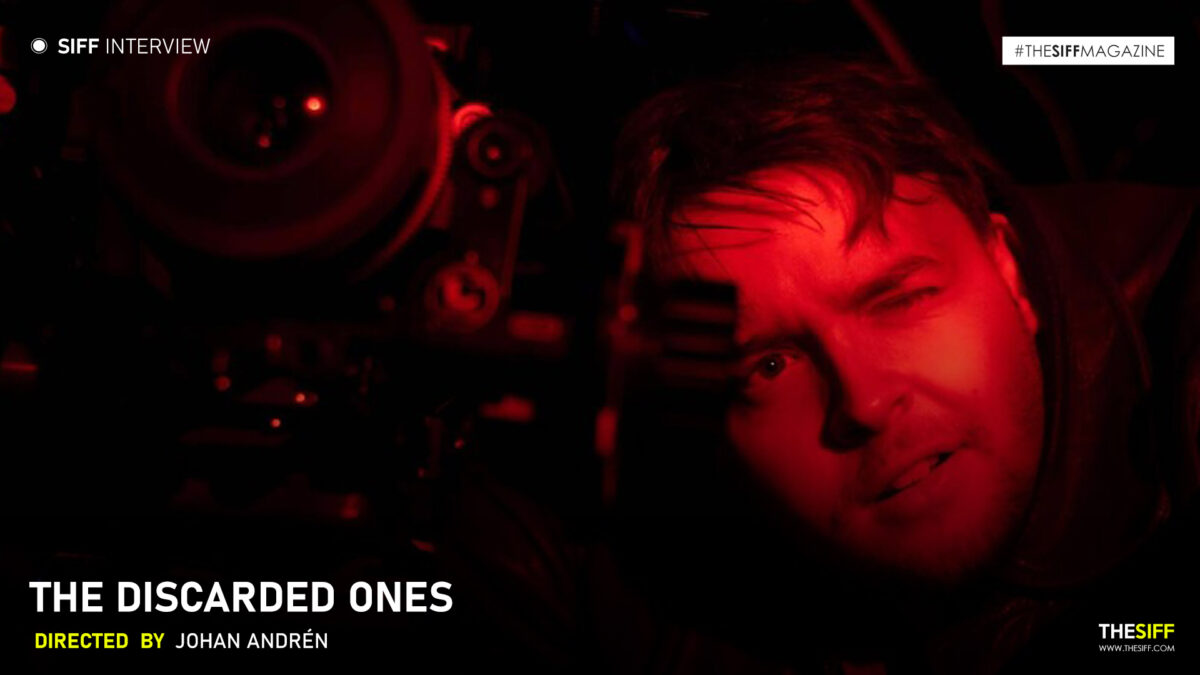
Movie : The Discarded Ones
Director – Johan Andren
Can you recall the earliest moment when The Discarded Ones first emerged in your imagination? Was it sparked by a historical image, a philosophical question, or a personal experience? What compelled you to stay with this story and see it through to completion?
The Discarded Oneswas already in the back of my head as we were making the film The Queen Of Hearts. I knew already from the early ideas that I wanted it to be a warfilm. Especially after tapping into the civil war in the previous film. I just wasn’t sure what exactly it would be about. I had these images in my head about a confederate fortress, a captured union company, and a big show-down at the end. I’ve always wanted to try to take on a warfilm but I also wanted this film to convey man’s bitterness and the cost of needless violence.
The title The Discarded Ones suggests lives deemed expendable. Does it reflect how soldiers, particularly foot soldiers and mercenaries are treated as already lost or morally compromised even before war fully consumes them? How central was this idea in shaping the narrative?
The title is one of many meanings. And while t’s certainly is a reflection of soldiers being doomed to die, the title is also about how the main characters have discarded their own identity. Dwight has discarded his humanity in a fuel of rage after his mother was killed by greys, Juliette has discarded her dreams as she is stuck being a scout when she could be out performing and making people happy. Instead, she has to take part in killing. And Scott has also discarded himself in a fuel of rage over Dwight for killing his brother which was the result of soldiers fighting each other. His brother’s death is just so personal because, well. It’s his brother. And all these characters are all stuck in this barely durable confederate camp that holds on by a thread to not collapse on itself as they wait for re-enforcements that may never come. They’re not just discarded by their command. They’re discarded by hope.
War in your film is stripped of grandeur and framed as exhaustion and moral erosion. How do you personally view war as a human institution? Additionally, how do you engage with the idea of cosmopolitanism (the belief in a shared humanity beyond national and ideological boundaries) and does this perspective inform the film?
I’ll be honest and say I’ve never been to war. Maybe I do not know what I am talking about and as such, I can only speak from the heart. I believe some things are worth fighting for. Fight to preserve peace. Fight to preserve freedom. These are valid arguments. I’m not going to argue with that. But to start a fight because this person doesn’t like that person for this and that, this person wants that piece of land. How much is enough? How many must perish for it? I’d like to think that when bullets fly over you, your ideology has been long stripped away and it’s just people trying to survive the best they can because that’s all that is left. Survive or die. This is what The Discarded Ones focuses on.
Themes of vengeance, repentance, and purgation quietly drive the story without ever becoming overt.
How did you approach weaving these ideas into the narrative? Were they conceptual foundations from the outset, or did they emerge organically through character and circumstance?
In the early drafts, it was going to be more straightforward. Union soldiers get captured and they make a daring escape. It could certainly make for a thrilling film in itself but it wasn’t a very thought provoking story. It was pretty much good guys and bad guys. You know who you would root for. The version we got in the end makes it clear that there are no clear heroes and villains but rather people with their own reasons for being part of this. Some because they feel they must, some because they want to fight, and others are forced into it.
The film presents a powerful foil to Dwight McCree, one who resists becoming a conventional antagonist. How important was it for you to ensure that this character never loses the audience’s empathy? What does this restraint add to the moral complexity of the story?
I wanted the audience to see Dwight at his lowest point. When he is more butcher than Dwight to make the audience think “The hell is his problem?” But then you get the reason “Oh! He lost his mother”. Suddenly everything makes sense. He lost someone at the hands of grey soldiers and it threw him over the edge. And then he finds out that Juliette, who is part of the greys, does not want to be here. She just wants to enjoy her life performing. This makes Dwight question if everyone here is as worth killing as he thought. Now he learned that she, like him, lost something. And later when he and Juliette make their escape, he sees Scott grieving over a fallen comrade. He has Scott in his sights and can easily kill him. And yet when he sees Scott grieving, he can’t bring himself to pull the trigger. Remember. Dwight had killed Scott’s brother and to Dwight, that was just another grey soldier. But meeting Scott, seeing the pain from the death of his brother breaks his butcher layers even more. Even if Scott kills Dwight, it won’t bring his brother back. the same as Dwight killing every grey soldier is not gonna bring his mother back. It all goes around in a spiral of grief and hate for one-another.
You deliberately blur the boundaries between good and evil, refusing to offer clear moral signposts. Why was it important for you to avoid binaries in this story? What do you hope viewers confront within themselves when the film denies easy judgments?
I wanted to show that these are just people trying to survive hell. Everyone is scared, lost hope or are just angry at each other. All these people are individuals. Everyone has their own story to tell. They have a job, maybe a family and all that but sadly, their story comes to an abrupt end. I wanted to try to give each character a time to shine. And I’m not just talking about the main characters. I talk about those soldiers all around. Everyone is trying to keep it together but in reality, everyone is just at the edge of their seats pissing their pants, waiting and wondering when it’s going to be their turn to bite the bullet. You hear small conversations where the soldiers complain about the moldy food, maybe about the supplies they got which is just stuff they have looted from dead soldiers because there are no other supplies.
Despite its thematic complexity, the story unfolds in a largely linear, three-act structure. How important was classical narrative form in grounding the film? Do you see structure as a discipline that sharpens meaning, or as a neutral framework that allows ambiguity to exist?
I think it just felt natural to have the red thread consistent and not needing to go back and forth in time because that would just make it an all out mess. The closest thing we get to that is how that story just throws you into the aftermath of a war zone with no context of who these men are or what their deal is. You never get a clear idea of who is the bad guy and who is the good buy. Dwight who the story centers around is presented as a ruthless killer and maybe the sergeant major who helps him might be one of the main characters-oh no, he died. Okay, guess we’re stuck with this butcher. Then we meet Scott. And he seems just as ruthless and hateful but you get some clearer hints from him. So again, you are left guessing who the film will focus on, who will be the villain, who will be the hero, but there never is a clear answer to that here. It’s all grey. At the start, everyone is kind of an asshole. It’s like an opposite character arc where everyone starts at their lowest point and climbs to their highest point.
The film carries echoes of classic westerns in its landscapes, pacing, and moral standoffs. How much did the western tradition influence your approach? More broadly, how do you think those films shaped cinema’s understanding of violence, justice, and solitude?
What gave it away? Hehe. I was very much the point. It took many angles from the western genre and there was even more of that in the earlier drafts. But since it was a war story, I felt I couldn’t lean too much into the western feel but you can totally see it. Especially with Juliette. She is definitely the most cowboy-ish of these characters. All the others are soldiers. Juliette kinda sticks out in that way because of her explosive vibe with all her snappy lines like “That’s our new toy” or “Enjoy the fireworks, fellas!” It’s kinda out of place especially with the seriousness of the film but I think Juliette hits that crosses that perfect small bridge effortlessly. that would fit right at home in a snappy high energy western film. And to be fair, this film is the second film in the series so it is more and more heading towards that direction.
Dialogue in The Discarded Ones is sparse but loaded with tension. How do you view the role of dialogue in drama, especially when silence and subtext often speak louder than words?
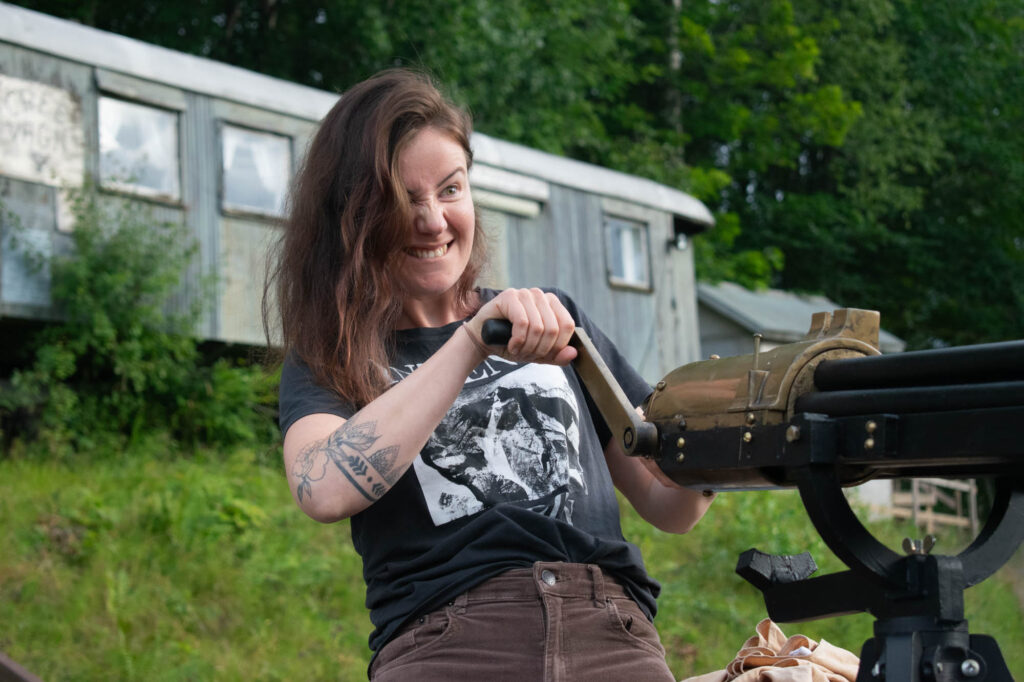
Dialogue is hard! You want it to sound like normal talk like a talk two people have with each other in real life. But that is near impossible. The best way I can describe how I write dialogue is to compare it to dialogue from like The Princess Bride or Indiana Jones. Very snappy. Very fun and memorable with weight. Juliette is a great example of that—Like when she says “Enjoy the fireworks, fellas!” But it’s not like it’s just a random throw-away line. It actually has more depth. This is perhaps a little overanalyzed but the irony is that in that moment she’s blasting a Gatling gun almost to vent, taking out all her rage on the people who forced her to be a scout. For a second, it feels like a ‘cool’ action movie moment. But then the silence hits, and Dwight sees that it’s turning into a massacre. He sees himself in that moment. Juliette loses her restraint, and Dwight witnesses this overkill. It’s that contrast between the ‘cool’ line and the ugly reality that shows how far these characters have been pushed.
As for silence, they are perfect for when a character needs to reflect. There are so many moments where characters have been given information and just have to let it all sink in. Even if it’s just for a moment. The moments are gold because you don’t need to telegraph something like “Oh my friend died, I must do something to take out my anger! Damnit, I can’t! Why does nothing make sense?!”. Just have the body speak. Don’t underestimate your audience. They will get it. Don’t telegraph everything. Like, unless you’re making a musical, of course..
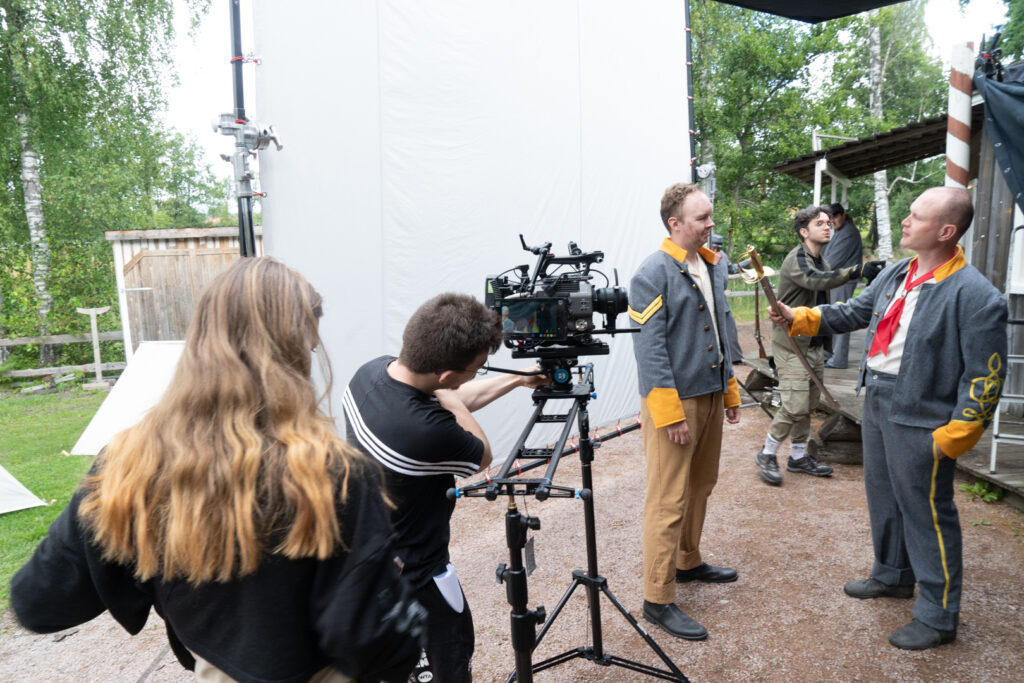
Finally, could you name five directors or films that have had a lasting influence on your creative life, whether stylistically, philosophically, or emotionally?
Steven Spielberg
Sergio Leone
James Cameron
Quentin Tarantino
Peter Jacksson
All these directors have influenced me as a filmmaker. They are the people who made me want to make films in the first place. So if they read this, I want to say thank you for inspiring me.
Thank you for taking the time out of your busy schedule to share these insights. Your reflections add depth to The Discarded Ones and invite audiences to engage with it beyond the screen.
Thank you for your time! I’m glad the film was appreciated and can’t wait to show my next project!