Movie : Row Your Boat
Director: Brian Golden

Inspired by The Velvet Rage by Alan Downs, Brian Golden does not so much adapt a text as metabolize it. Row Your Boat feels like theory passing through flesh, as if the abstract architecture of queer shame had been rerouted into tendons and breath. Golden understands that internalized judgment is rarely theatrical in its origin. It is quiet, domestic and to some extent procedural. The opening images of Donny Collinson, Spencer Seebach, and Zachary Buri alone in their bedrooms, framed by laptops and doorways, are composed with a stillness that feels almost ethnographic. Their coy cataloguing of their type carries the brittle levity of a dating show audition, yet beneath the wit is the unmistakable cadence of self assessment. Desire is filtered through market logic. Even longing must justify itself.

Golden’s central conceit, the boxing ring assembled from chairs and rope, is at once absurd and devastating. It literalizes the notion of life as a proving ground while exposing the artifice of the arena. This is not a grand stadium but a makeshift square, a structure that can be dismantled, which makes the violence enacted within it feel all the more intimate. The disembodied commands that invoke rowing convert choreography into labor. Legs, bodies and arms become less a rhythm than a catechism. Repetition accrues meaning not through variation but through attrition. The dancers exhaust themselves in pursuit of a finish line that never materializes. Validation here is not a trophy but a horizon that recedes with every stroke.
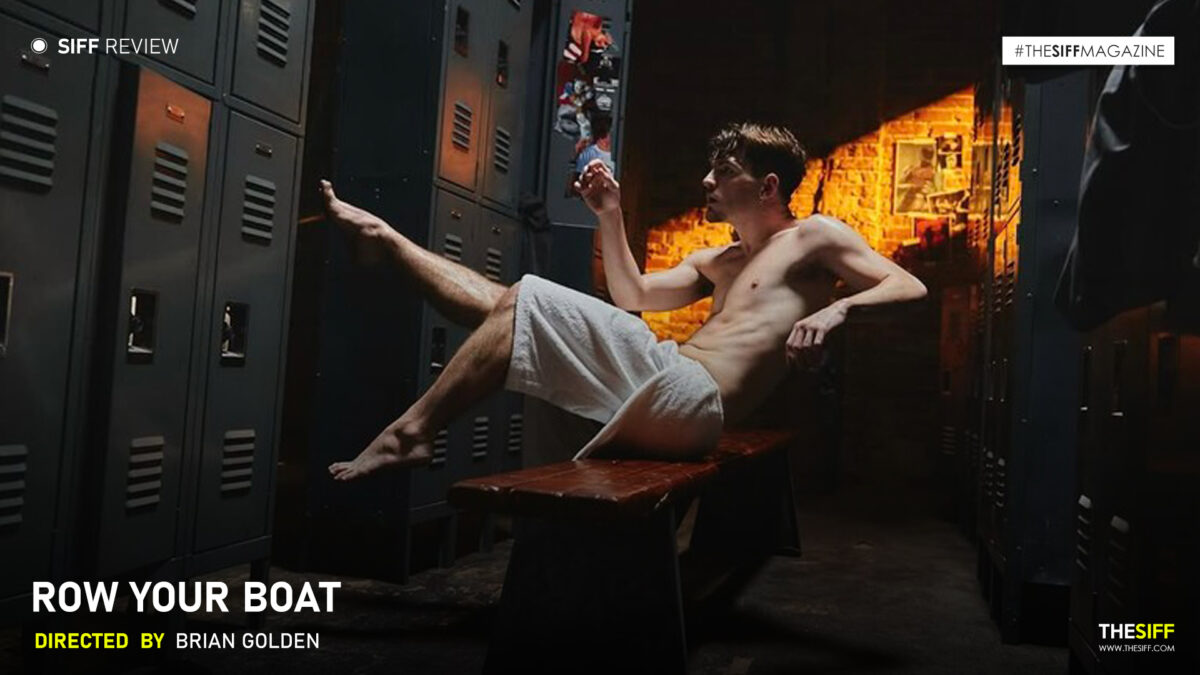
Collinson’s locker room solo distills the film’s dialectic between exhibition and abjection. His movement oscillates between grounded contemporary articulation and flashes of pop bravado, as if toggling between sincerity and persona. What is striking is not his technical facility but the volatility of his effect.. Euphoria curdles into unease within a single phrase. When he strips, the gesture reads less as seduction than as exposure under fluorescent scrutiny. The subsequent encounter with the blow up doll in the sauna approaches the allegorical without sacrificing tactility. His skin flushes and trembles while the doll remains smooth and unresponsive. The juxtaposition becomes a meditation on the fantasy of perfection as a form of deathliness. To be unmarked is to be unmoved.

The cinematography by Josh Rose resists spectacle in favor of proximity. The camera does not dominate the bodies but seems to breathe with them, attending to pores, condensation, and the granular detail of fatigue. This intimacy implicates the viewer. We are not granted the safety of aesthetic distance. Instead, we are folded into the choreography of watching, made aware of our own appetite for vulnerability performed at scale.
Row Your Boat ultimately refuses catharsis. It offers no declarative emancipation from shame, no triumphant reclamation of the self. What it proposes instead is endurance as a mode of knowledge. Through relentless physicality and ritualized repetition, Golden suggests that identity is not a stable revelation but a process negotiated in cycles of striving and collapse. The film’s profundity lies in its ambivalence. It neither condemns the desire for validation nor sanctifies it. Rather, it situates that desire within a historical and corporeal continuum, where resilience is less about transcendence than about the stubborn insistence on remaining animate. In this sense, the act of rowing becomes existential. One rows not to arrive but to persist, to feel the resistance of the water and know that one is still, defiantly, in motion.