Movie : ENESCU, skinned alive
Director : Toma Enache
Enescu – Skinned Alive, directed by Toma Enache, offers a thoughtful and visually rich portrait of the legendary Romanian composer George Enescu. Instead of following a conventional chronological biography, the film approaches its subject through emotion, atmosphere, and personal relationships, creating a portrait that feels intimate and deeply human.

The title Skinned Alive reflects the emotional core of the film. It evokes the image of an artist whose sensitivity makes him profoundly receptive to the world around him. Enescu is portrayed as someone who experiences life with extraordinary intensity, and the film captures this vulnerability with remarkable subtlety. Rather than presenting him as a distant historical figure, the narrative allows the audience to see the inner struggles and passions that shaped both the man and his music.
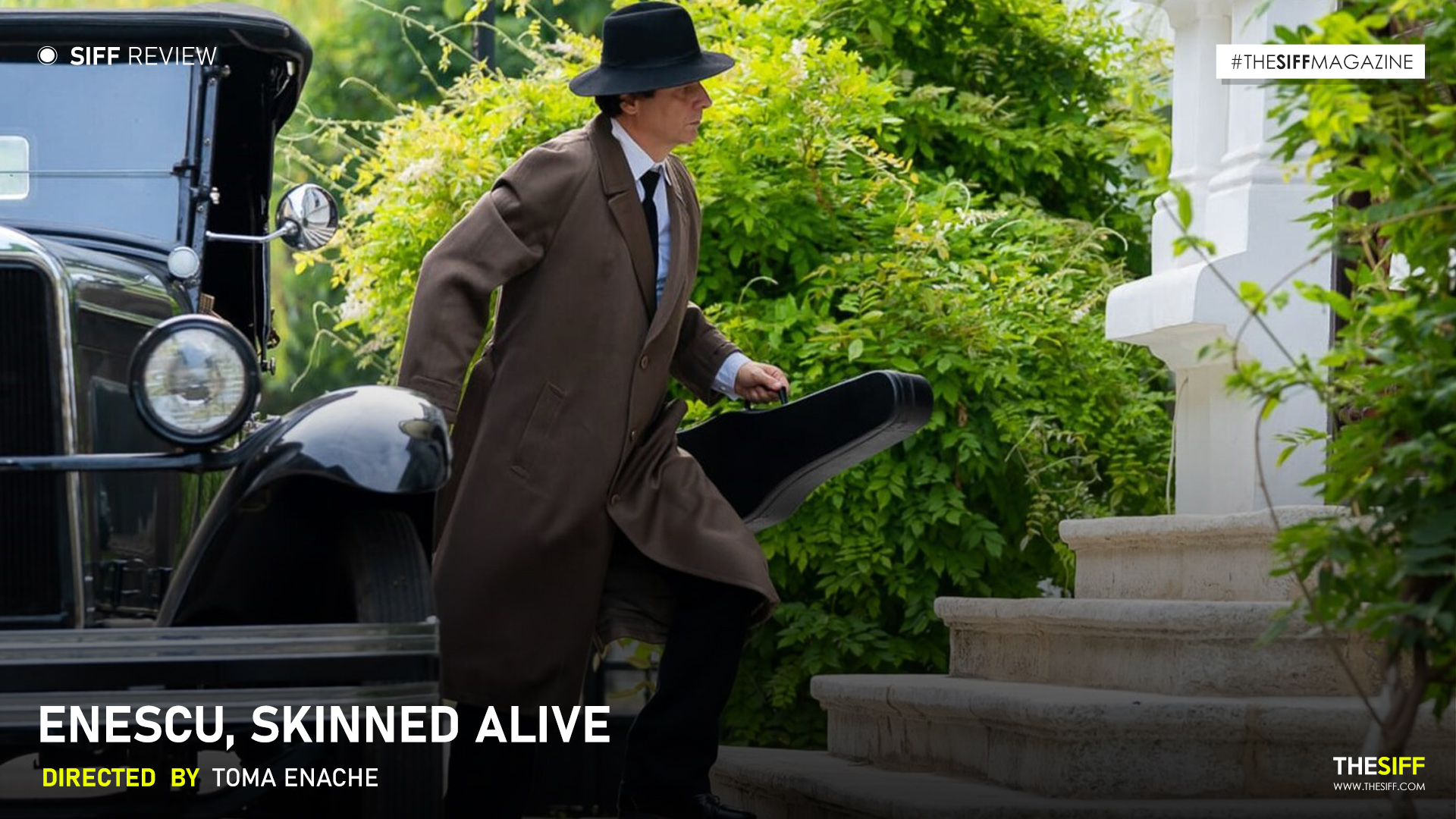
The story unfolds within the refined cultural world of early twentieth-century Europe. The production design is particularly impressive: elegant interiors, detailed period costumes, and carefully constructed settings recreate the atmosphere of the era with remarkable authenticity. These visual elements are not merely decorative; they

contribute significantly to the mood of the film and help situate the audience within Enescu’s world. The visual style reflects a careful attention to detail that gives the film a timeless quality.
At the centre of the narrative is Enescu’s relationship with Maria Cantacuzino. Their connection is portrayed with emotional depth and complexity, revealing how love, admiration, and personal conflict can shape an artist’s life. The relationship becomes a driving force within the story, highlighting the tension between artistic devotion and personal feeling. Through this dynamic, the film suggests that creativity often emerges from moments of profound emotional intensity.
Toma Enache’s direction shows a clear sense of visual and narrative control. The film moves with a deliberate rhythm, allowing scenes to breathe and emotions to unfold naturally. Lighting, framing, and composition are used effectively to create an atmosphere that occasionally feels almost theatrical, yet remains cinematic in its impact. This stylistic approach enhances the emotional resonance of the story and reflects the dramatic

world in which Enescu lived and created.
The portrayal of Enescu emphasizes the contrast between public admiration and private sensitivity. The composer appears as a figure deeply devoted to his art, yet constantly navigating the emotional complexities that accompany creative brilliance. This portrayal adds a strong human dimension to a historical figure who might otherwise remain distant.
What makes Enescu – Skinned Alive particularly compelling is its focus on the emotional life behind artistic achievement. The film suggests that great creativity is often inseparable from deep feeling and personal struggle. By exploring this idea with sincerity and visual elegance, the film becomes more than a historical portrait—it becomes a reflection on the nature of artistic dedication.
Beautifully crafted and rich in atmosphere, Enescu – Skinned Alive offers a moving and respectful tribute to George Enescu. It presents the composer not only as a cultural icon but also as a sensitive individual whose life and emotions were inseparable from his music. The result is a film that celebrates both artistic genius and the emotional depth from which great art is born.