Movie : Kulyas 2: Zikr-i Ayin
Director: Yunus Sevik
“That is not dead which can eternal lie, And with strange aeons even death may die.” – H.P Lovecraft
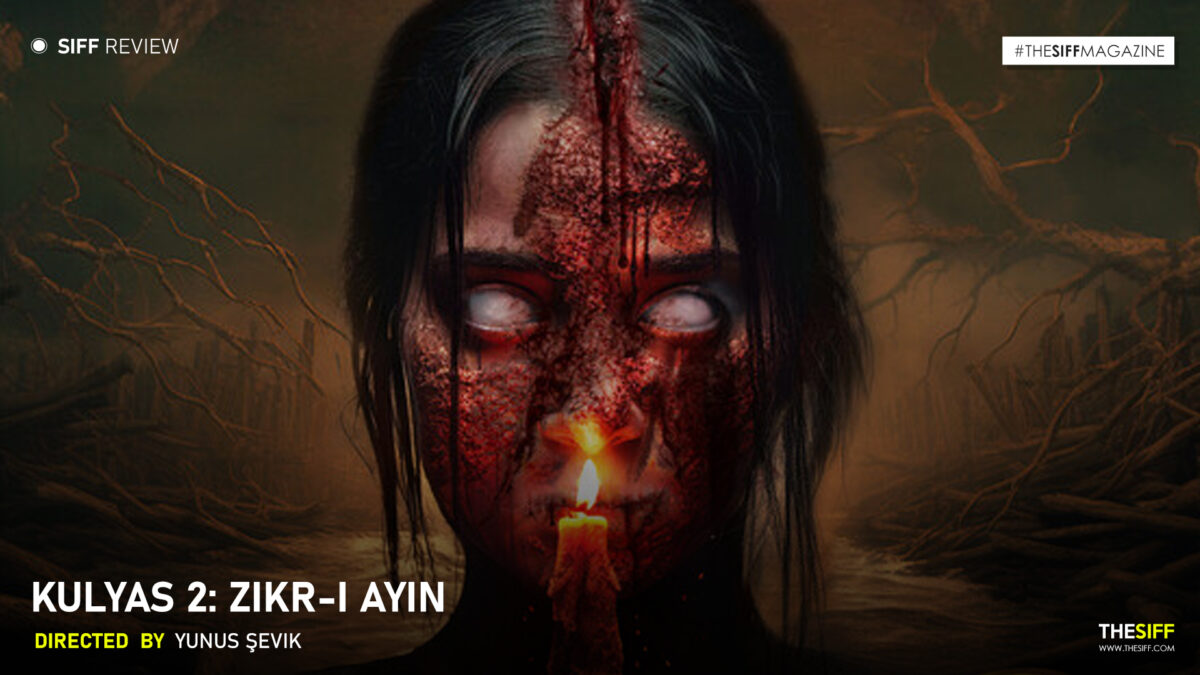
Kulyas 2: Zikr-i Ayin, directed by Yunus Sevik, unfolds like a whispered confession passed down through centuries. It does not rush to declare itself as horror. Instead, it settles slowly into the viewer’s consciousness, allowing unease to germinate before it reveals its full intent. The film is guided by a rare understanding that fear is not something to be announced but something to be cultivated, patiently and almost reverently.
Helen’s story begins with longing, but it does not remain there. Her desire to reclaim a lost love becomes the first fracture in a reality already weakened by history. When she turns to forbidden spells, the act feels less like rebellion and more like inevitability, as though the past has been waiting for her to make this mistake. The revelation of her sacred yet cursed bloodline reframes her choices entirely. Helen is not simply a woman meddling with forces beyond her comprehension. She is a convergence point where love, lineage, and transgression collide. The Kulyas jinn do not arrive as invaders. They awaken as inheritors.
The screenplay moves with a quiet insistence, never allowing the story to rest. There is an intelligence to this restlessness. Moments that might have offered relief instead introduce new forms of anxiety, deeper and more intimate than before. The film understands that dread thrives in continuity. Tension is not punctuated but sustained, flowing from scene to scene like a low fever that never breaks.
Visually, the film speaks in shadows. Its colour grading is meticulous, not in pursuit of beauty but of erosion. Warmth fades almost imperceptibly, replaced by tones that feel drained of life. Darkness is not merely a setting but a condition. The screen seems to grow heavier as the narrative progresses, as if light itself is being exhausted by the weight of the curse. This gradual dimming creates an unspoken contract with the viewer. By the time the film reaches its most harrowing moments, brightness feels unnatural, even intrusive.
The imagery drifts toward the phantasmagoric, not through excess but through distortion. Faces linger too long. Spaces feel subtly misaligned. Rituals are presented with a disquieting intimacy, their power suggested rather than explained. The most unsettling moments often occur in what is missing. A silence that stretches beyond comfort. A presence implied but never confirmed. Fear emerges not from what the film shows, but from what it withholds.
Sound design and score function as an emotional undercurrent rather than a directive force. The background score tightens and recedes with an almost predatory intelligence, heightening anxiety without ever offering release. Silence becomes as expressive as music, carving out spaces where dread can settle and expand.
Performances anchor this atmosphere with restraint and precision. Helen’s fear is inward, layered, and deeply human. She does not collapse under terror. She carries it, allowing it to shape her movements and decisions. Mustafa Hoca and Yavuz feel marked by knowledge rather than authority. Their understanding of the jinn does not grant them power so much as burden. This emotional economy makes every interaction feel charged, every moment precarious.
The narrative’s structure stretches across Kars, Istanbul, and America, while reaching back to the eighteenth century Ottoman Empire and a legend intertwined with Russian Tsar Nicholas. These shifts are not ornamental detours but reminders that curses are not bound by geography or time. History in this film is not past. It is active, mobile, and unforgiving.
In the end, Kulyas 2: Zikr-i Ayin emerges as a work of atmospheric horror that trusts its audience. It does not seek to shock so much as to unsettle, to leave behind an unease that resists resolution. Salvation arrives only through loss, and even then, it feels provisional. The film closes without a sense of finality, lingering like a prayer spoken too late. What remains is the quiet, disturbing realization that some rituals do not end when the screen fades to black. They continue, unseen, in the dark spaces we carry with us.